In the whimsical world of Minecraft, doors are more than just barriers; they’re gateways to adventure, creativity, and maybe a little bit of chaos. Whether players are trying to keep their prized possessions safe from pesky creepers or simply adding a touch of style to their builds, understanding the diverse array of doors available can make all the difference.
From the classic wooden door that swings open with a satisfying creak to the high-tech iron door that screams “I mean business,” each type serves its purpose while adding character to any structure. As players dive into the pixelated realm, they’ll discover that doors can be both functional and fashionable. So, buckle up and prepare to explore the many doors of Minecraft—who knew a simple slab of wood could lead to such endless possibilities?
Overview of Minecraft Doors
Minecraft features several types of doors, each with unique properties and crafting recipes. Wooden doors, crafted from six wood planks, allow players to create a welcoming entrance to their homes. Iron doors, made from six iron ingots, offer increased security but require a redstone mechanism for operation.
Players encounter other variations, such as crimson and warped doors from the Nether. These doors mirror their wooden counterparts in design but feature vibrant colors, enhancing the aesthetic appeal of builds. In addition, players can produce trapdoors from wood or iron to create versatile openings in walls, ceilings, or floors.
Primarily, doors provide functionality. They serve as barriers to mobs and can be activated by redstone signals or pressure plates. For example, wooden doors open when a player steps on a pressure plate, while iron doors respond to levers or buttons.
Players benefit from the ease of use associated with doors. Crafting a door, regardless of type, requires straightforward resources, offering accessible options for all players. Additionally, doors can be stacked and placed in various configurations, allowing for creative designs.
Exploring the significance of doors, they create distinct anti-mob barriers while facilitating movement through structures. Utilizing different materials fosters diversity in design, letting players express creativity. With numerous options available, doors enhance gameplay by blending function with artistry, ensuring every build remains inviting and secure.
Types of Minecraft Doors
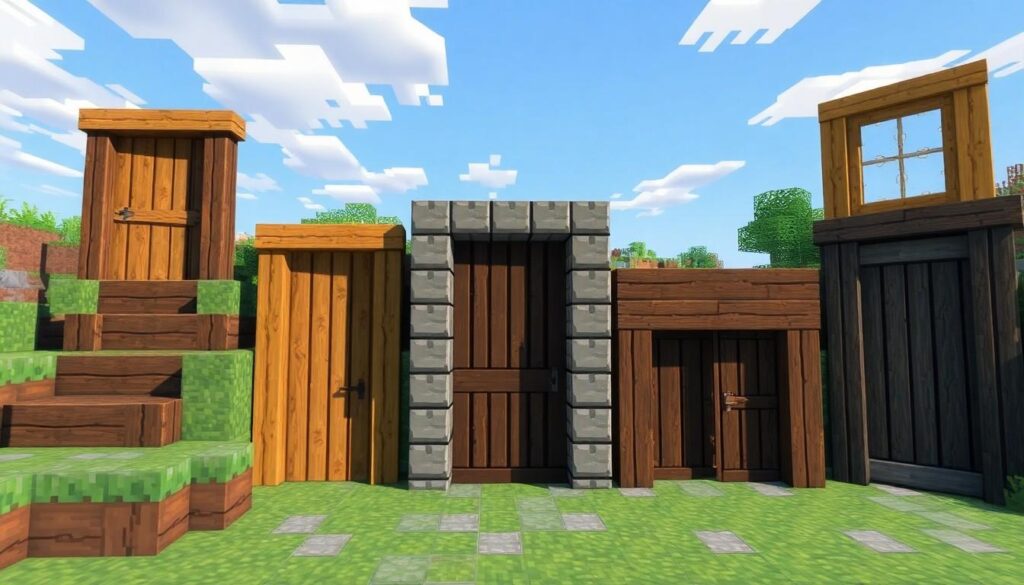
Minecraft features several door types, each serving distinct purposes and enhancing gameplay and design.
Wooden Doors
Wooden doors create welcoming entrances in various builds. Crafted from six wooden planks, they come in several types, including oak, birch, spruce, jungle, acacia, and dark oak. Players appreciate their accessibility and ease of use. A wooden door opens with a simple right-click, making entry and exit seamless. Mobs can’t pass through these doors, providing an effective barrier. The crafting process requires only basic resources, making them suitable for players at any level. Their versatility allows players to incorporate them into different architectural styles while maintaining functionality.
Iron Doors
Iron doors enhance security for players’ structures. Made from six iron ingots, these doors boast higher durability than wooden variants. They require redstone power or activation to open, making them ideal for traps or secure bases. Unlike wooden doors, mobs cannot open iron doors, increasing safety from hostile encounters. Players often use pressure plates or buttons to manage access. Their metallic appearance adds a modern aesthetic to builds, appealing to those who focus on industrial designs. Crafting iron doors takes more resources, prioritizing security over convenience.
Trapdoors
Trapdoors offer versatile openings in Minecraft builds. Crafted from six wooden planks or iron ingots, they serve both functional and decorative roles. These doors can be placed vertically or horizontally, allowing unique design options. Trapdoors are ideal for creating hidden entrances or incorporating into furniture designs, enhancing creativity. Players can easily open them with a right-click or activate them with redstone. Mobs cannot pass through wooden trapdoors but can interact with the iron variety. Their ability to blend seamlessly into different environments makes trapdoors popular choices among players.
Crafting and Usage of Doors
Doors in Minecraft are essential elements for both security and design. They offer a range of crafting recipes and activation methods.
Crafting Recipes
Creating doors begins with raw materials. Wooden doors require six wood planks, while iron doors need six iron ingots. Different types of wood produce distinct door styles, including oak, birch, spruce, jungle, acacia, and dark oak. Players can find crimson and warped doors in the Nether, which add vibrant colors to their builds. Trapdoors also enhance creativity, requiring six wood planks or six iron ingots for crafting. Each recipe allows players to customize their entrances according to specific preferences.
Activation Methods
Activating doors involves various techniques. Wooden doors can be easily opened with a simple right-click. Iron doors, however, require redstone mechanisms, adding a layer of complexity. Players can utilize buttons, levers, or pressure plates to trigger these doors. Trapdoors also function similarly, allowing activation through redstone components or direct interaction. While wooden trapdoors block mob passage, iron trapdoors can be used by mobs. Different activation methods enhance gameplay possibilities, making each build more interactive.
Comparison of Door Types
Different door types in Minecraft offer players a blend of durability and visual appeal. Understanding how these elements function can enhance gameplay experiences.
Durability and Strength
Wooden doors typically possess lower durability, surviving 59 hits before breaking. In contrast, iron doors boast a much higher durability rating with 251 hits. These iron doors serve as effective barriers against hostile mobs, reinforcing security in builds. Players often choose iron doors over wooden ones for their strength and resistance. While wooden doors allow mob passage, iron doors prevent it, making them ideal for secure environments. Crafting recipes contribute to their strength, with the use of iron ingots yielding better resilience.
Aesthetic Options
Aesthetic choices in doors can greatly influence a building’s overall design. Wooden doors come in various styles, including oak, birch, and jungle, each providing unique textures and colors. Iron doors offer a sleek, modern look but lack the diverse color range of wooden options. For vibrant designs, players can choose from crimson and warped doors, found in the Nether. Trapdoors add versatility, functioning as both entrances and decorative elements. Each door type allows for distinct architectural expressions, enabling creativity in player builds. The combination of functionality and aesthetics gives doors a significant role in enhancing gaming experiences.
Conclusion
Doors in Minecraft are more than just simple entrances; they’re vital components that enhance gameplay and creativity. Each type of door offers unique features that cater to different building styles and security needs. Whether players opt for the inviting charm of wooden doors or the robust security of iron doors, the choices available allow for endless customization.
The vibrant options from the Nether and the versatility of trapdoors further expand the possibilities for design and functionality. By exploring these various doors, players can transform their builds into secure and aesthetically pleasing spaces. Embracing the full potential of doors can truly elevate the Minecraft experience, making every structure feel more alive and dynamic.