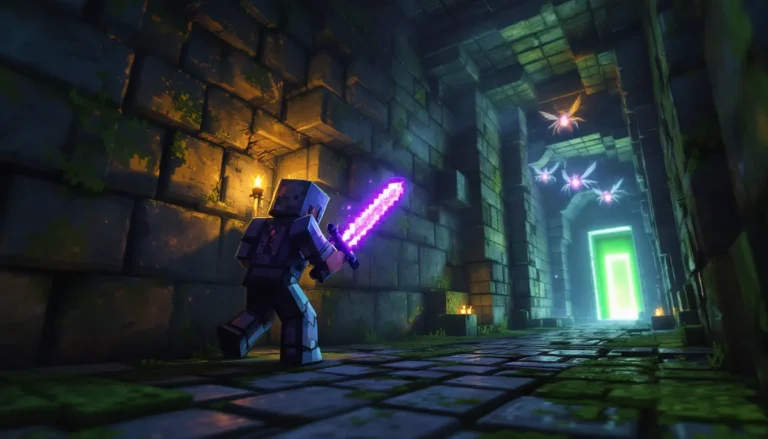
Blazes rank among the most dangerous and valuable mobs in Minecraft. These flying, fireball-slinging hostiles guard the Nether fortresses, and they’re the only source of blaze rods, an essential ingredient for reaching the End and brewing potions. Whether you’re prepping for your first Ender Dragon fight or planning an automated farm, understanding blazes is non-negotiable.
This guide covers everything: spawn mechanics, combat strategies, farming methods, and the mistakes that get players killed. If you’ve ever gotten torched while exploring a fortress or wondered how speedrunners collect blaze rods in under five minutes, you’re in the right place.
Table of Contents
ToggleKey Takeaways
- Blazes in Minecraft are hostile Nether mobs with 20 health that drop essential blaze rods, which are required to craft Eyes of Ender and reach the End dimension.
- Snowballs (3 damage per hit) and shields are surprisingly effective weapons for blaze combat, with snowballs being a faster option for speedrunners who can stun-lock blazes with rapid throws.
- Blaze spawners are found exclusively in Nether fortresses and spawn one blaze every 10-20 seconds, making fortress-hunting along the Z-axis the first step in any rod collection run.
- Semi-automatic blaze farms using water channels and killing chambers can produce 100+ rods per hour while maintaining optimal efficiency and XP rewards.
- Blazes are immune to fire and lava but take 1 damage per tick from water contact, making water-based farm designs and snowballs critical to both combat and farming strategies.
- Common fatal mistakes include fighting near lava edges, ignoring afterburn damage, carrying only melee weapons, and aggro-ing multiple blazes without proper Fire Protection enchantments or cover.
What Is a Blaze in Minecraft?
Blazes are hostile mobs exclusive to the Nether dimension. They spawn naturally in Nether fortresses and represent one of the few mobs capable of sustained ranged attacks. Players encounter them during mid-to-late game progression, typically when gathering materials for Eyes of Ender or building a brewing stand.
These mobs have 20 health points (10 hearts) and deal significant fire damage. They’re immune to fire and lava, which makes sense given their spawn location. Blazes don’t pursue players outside of Nether fortresses unless aggroed, and they deaggro if you move far enough away.
Physical Characteristics and Behavior
Blazes have a distinctive appearance: a yellow head surrounded by rotating rods, with a smoke particle effect trailing below. When idle, these rods hang loosely. When attacking, the rods ignite and spin rapidly while the blaze rises slightly in the air.
Their attack pattern involves shooting three fireballs in quick succession, with a brief cooldown between volleys. Each fireball deals 5 damage (2.5 hearts) on Normal difficulty, plus fire damage over time. Blazes can hit targets up to 48 blocks away, though their accuracy drops significantly beyond 16 blocks.
Blazes actively avoid water and take damage from it, 1 damage per tick of contact. Snowballs also deal 3 damage per hit, making them surprisingly effective. This water weakness is critical for farm designs and combat strategies.
Natural Habitat and Spawn Conditions
Blazes spawn exclusively in Nether fortress structures, specifically in fortress corridors and around blaze spawner cages. They require a light level of 11 or lower to spawn naturally, though spawners ignore light level entirely.
Wild blazes (not from spawners) spawn in groups of 2-3 in fortress areas. The spawn rate increases based on the size of the fortress and how much of it has been explored. Blazes won’t spawn on transparent blocks, so glass or slabs can prevent natural spawns in cleared areas.
Spawners generate in small rooms with Nether brick fences forming a cage around them. These spawner rooms always have a chest nearby containing fortress loot. Each spawner can support up to 6 blazes in the surrounding area before it stops spawning more.
Where to Find Blazes in the Nether
Nether fortresses are the only structures where blazes spawn, making fortress-hunting the first step in any blaze rod collection run. These massive structures generate along the Z-axis (north-south direction) in all Nether biomes, though they’re easiest to spot in Nether wastes due to reduced visual clutter.
Locating Nether Fortresses
Fortresses generate in strips along the Z-axis, typically 200-400 blocks apart. If you travel east or west and don’t find a fortress within 400 blocks, change direction to north or south. This quirk of fortress generation is well-documented by the speedrunning community and can save hours of searching.
Build a basic pathway at Y-level 70-80 using cobblestone or another fire-resistant block. This height provides good sightlines across lava lakes while keeping you above the main Nether floor dangers. Bring plenty of blocks, fortress searches often require thousands of blocks of travel.
In Minecraft’s current version (1.21.x as of early 2026), fortresses are visible from significant distances due to their dark Nether brick contrasting with surrounding terrain. Use a higher render distance if your system can handle it. Some players prefer exploring the mobile version for its portability during long grinding sessions.
Identifying Blaze Spawners
Blaze spawners sit inside small rooms constructed from Nether brick, with Nether brick fence forming a protective cage. These rooms always connect to fortress corridors, they’re never isolated. When you approach within 16 blocks, the spawner activates and begins cycling.
Active spawners emit flame particles and rotate the blaze model inside. They spawn one blaze every 10-20 seconds as long as fewer than 6 blazes exist within a 16-block radius. The spawner checks a 9×9×9 area for eligible spawn positions.
Most fortresses contain 1-3 blaze spawners, though some generate with none and others have five or more. Mark spawner locations with distinct blocks or coordinates. If you’re planning a farm, choose the spawner with the best access and clearest surrounding space.
How to Defeat Blazes: Combat Strategies and Tips
Fighting blazes requires different tactics than most Minecraft combat. Their ranged attacks, flight capability, and fire immunity eliminate several standard strategies. Players who treat blazes like zombies or skeletons typically die fast.
Best Weapons and Equipment for Fighting Blazes
Snowballs are surprisingly effective, 16 snowballs kill one blaze (3 damage per hit). They’re cheap, stackable to 16, and bypass the need for expensive equipment. Speedrunners often carry stacks of snowballs specifically for blaze fights. Craft them from snow blocks found in snowy biomes before entering the Nether.
Bows work well but require significant ammunition. An unenchanted bow needs 5-6 arrows per blaze on Normal difficulty. Power V reduces this to 2-3 arrows. Infinity is ideal for extended fortress clearing, though Mending works if you have an XP farm.
Swords force close-quarters combat, which is risky. A diamond or netherite sword with Sharpness V kills blazes in 3-4 hits, but you’ll take fire damage getting into melee range. According to extensive combat testing by IGN, melee is only recommended with Fire Protection IV armor.
Shields block fireball damage entirely, including the fire effect. Combining a shield with a bow lets you peek out from behind cover, block incoming volleys, then return fire. This method is slower but nearly eliminates risk.
Fire Resistance potions make blaze fights trivial, you become immune to their primary damage source. But, this requires brewing, which needs blaze powder, creating a chicken-and-egg problem for first-time fortress raiders.
Effective Combat Techniques
Stay mobile. Blazes telegraph their attacks by lighting up and rising slightly. When you see this animation, strafe perpendicular to the blaze’s facing direction. The three-fireball volley has a spread pattern, and lateral movement dodges at least two of the three projectiles.
Use terrain to your advantage. Nether brick pillars and corridors provide natural cover between attacks. Pop out, shoot, retreat behind cover while blazes fire back. This peek-and-shoot method minimizes damage taken.
Prioritize targets. When multiple blazes aggro, kill the closest one first while using cover to block others. Fighting more than two blazes simultaneously without proper gear is asking for a respawn.
Snowball spam works incredibly well. Since they deal instant damage and have a high fire rate, you can stunlock blazes by hitting them repeatedly. Practice your aim in safe areas first, missed throws waste precious inventory slots.
Defensive Strategies and Armor Choices
Fire Protection IV on all armor pieces reduces fire damage by 64%, making blaze encounters significantly safer. If you can only enchant one piece, prioritize the helmet or chestplate. Some players run one piece of Fire Protection IV alongside three pieces of Protection IV for balanced defense.
Diamond armor is the minimum recommended gear. Iron armor works but leaves very little margin for error. Netherite provides marginal improvement over diamond for this specific fight, the real benefit of netherite is knockback resistance and general durability.
Bring building blocks to create emergency cover. If overwhelmed, pillar up three blocks and place a roof over your head. Blazes can’t hit you from directly below. Use this time to heal or reorganize.
Golden apples (regular or enchanted) provide absorption hearts and regeneration. Pop one before engaging groups of blazes. The absorption hearts effectively increase your HP pool, giving you room to tank a few extra hits.
Shields are underrated for blaze combat. They block 100% of fireball damage and don’t degrade quickly against projectiles. Combine shield use with bow shots for low-risk clearing.
Blaze Drops and Their Uses
Blazes drop blaze rods, which convert into blaze powder, one of Minecraft’s most important crafting materials. Without blaze rods, players can’t reach the End dimension or access most brewing recipes. A single blaze has a 50% chance to drop one rod when killed by a player.
Looting enchantments increase drop rates. Looting III raises the maximum possible drops to four rods per blaze, though the average sits around 1-1.5 rods per kill. For speedrunners, seven blaze rods is the theoretical minimum needed to beat the game (six for Eyes of Ender, one for a brewing stand), though most collect 8-10 for safety.
Blaze Rods: Crafting and Applications
Blaze rods craft into two items: blaze powder and the brewing stand. One rod converts into two blaze powder at a crafting table. The brewing stand requires three rods arranged horizontally.
Beyond the brewing stand, blaze rods serve as efficient furnace fuel, smelting 12 items per rod. This makes them better than coal (8 items) but worse than lava buckets (100 items). Most players don’t use rods for fuel due to their higher-value applications.
In older game versions (pre-1.9), blaze rods were used in crafting End rods. Current versions require popped chorus fruit and blaze rods for End rod crafting, making them relevant for End-game building projects.
Blaze Powder and Its Importance
Blaze powder has three critical uses:
-
Eye of Ender crafting: Combine blaze powder with an ender pearl to create an Eye of Ender, used to locate and activate the End portal. Activating a portal requires 12 Eyes, though finding the stronghold uses 4-8 additional Eyes on average.
-
Brewing fuel: Blaze powder powers the brewing stand. Each powder fuels 20 brewing operations. Detailed brewing mechanics are covered extensively in guides at Game8 and similar resources.
-
Magma cream crafting: Combine blaze powder with a slime ball to create magma cream, used in Fire Resistance potions and magma blocks.
Players building the creative structures seen in advanced builds often need steady blaze powder supplies for potion-based buffs during long construction sessions. A modest blaze farm provides more than enough powder for typical gameplay needs.
Building an Efficient Blaze Farm
Blaze farms automate rod collection and XP generation. A proper farm delivers 100+ rods per hour alongside respectable experience rates. They’re considered mid-game farms, easier than Guardian farms, harder than basic mob grinders.
Choosing the Right Farm Design
Three main farm designs dominate: manual grinders, semi-automatic farms, and fully automatic farms.
Manual grinders are the simplest. Build a killing chamber beneath the spawner where blazes drop into a small room. You kill them manually while standing safely behind glass or Nether brick. These farms require active player participation but need minimal resources.
Semi-automatic farms use water streams or pistons to move blazes into position, then damage them to low health. You deliver the final blow manually to collect XP and drops. These farms balance automation with XP retention.
Fully automatic farms kill blazes without player input, using fall damage or campfire suffocation. They maximize rod collection but sacrifice XP. Players with existing XP sources (Enderman farms, Guardian farms) prefer this design.
For most players, semi-automatic designs offer the best value. They’re resource-efficient, provide XP, and don’t require constant attention.
Step-by-Step Construction Guide
This guide covers a basic semi-automatic farm using a 9x9x9 spawn chamber:
-
Clear the spawner room. Remove the Nether brick fence cage and any nearby Wither skeletons or Blazes. Light up surrounding fortress areas with torches to prevent other mob spawns from filling the mob cap.
-
Build a spawn chamber. Create a 9x9x9 enclosed space with the spawner at the center. Use Nether brick or cobblestone, avoid flammable materials. The spawner should be roughly at head height when you stand on the chamber floor.
-
Add water channels. Place water source blocks around the perimeter of the spawn chamber floor, sloping toward a central collection point. Blazes take damage from water and are pushed by the flow. This pushes them toward your killing area while weakening them.
-
Create a killing chamber. Below or adjacent to the spawn chamber, build a small room (3x3x2) where water currents deposit blazes. Install a glass viewing window so you can safely attack blazes with a sword. Include a hopper system beneath to auto-collect drops.
-
Add safety features. Install an on/off switch using pistons to block spawner line-of-sight when needed. Add emergency exits and fire-resistant barriers. Place a beacon nearby for Regeneration if you have the resources.
-
Test and optimize. Activate the spawner and observe blaze behavior. Adjust water flow if blazes get stuck. Fine-tune the killing chamber height so blazes arrive at low health (around 2-3 hearts remaining).
Optimizing Your Farm for Maximum Efficiency
Spawn rates depend on the player’s proximity to the spawner. Stand within 16 blocks for maximum spawn frequency. AFK spots should be exactly 16 blocks from the spawner for optimal rates without wasting spawns.
Light level management matters even for spawner-based farms. While the spawner itself ignores light levels, surrounding areas can spawn wild blazes if too dark. Light up a 32-block radius around your farm to prevent random spawns from interfering.
Looting III swords dramatically increase rod collection. If you can’t get Looting III initially, upgrade when possible. The difference between no Looting and Looting III is roughly 2x drop rates.
Multiple spawners in close proximity can share a single farm. If you’ve found a fortress with 2-3 spawners near each other, build a centralized collection system. This multiplies output without significantly increasing complexity.
Resource comparison data from Nexus Mods shows that well-optimized blaze farms rival traditional XP farms in efficiency while providing valuable materials, making them worth the investment for serious players.
Common Mistakes When Dealing with Blazes
Players make predictable errors when dealing with blazes, especially during their first fortress raids. Knowing these mistakes helps you avoid frustrating deaths and lost gear.
Fighting near lava is mistake number one. Blazes knock you back when hit, and fortress bridges often have lava directly below. Getting launched into lava while fighting blazes is a common death. Clear fighting spaces away from edges, or build temporary barriers.
Ignoring fire damage kills more players than direct fireball hits. Fire ticks for 4 seconds after being hit, dealing 1 damage per second. Factor this into your healing calculations. Many players heal the initial hit but die to afterburn.
Using the wrong weapons wastes inventory space and time. Bringing only a sword forces dangerous melee combat. Bringing only a bow burns through arrows fast. The optimal loadout includes both ranged options (bow or snowballs) and a backup melee weapon.
Not bringing building blocks leaves you vulnerable if overwhelmed. Emergency pillaring and cover creation can save runs. Carry at least 64 cobblestone or Nether brick.
Aggro-ing multiple blazes simultaneously without proper gear is suicidal. Three blazes firing simultaneously equals nine fireballs in the air every few seconds. Fight from cover and pull one at a time whenever possible.
Forgetting potion buffs is understandable for first-time raiders but inexcusable for experienced players. Fire Resistance makes blaze combat trivial. Strength potions reduce kill time significantly. Speed potions help with dodging.
Breaking spawners accidentally happens when players panic or mine carelessly. Once broken, spawners never respawn. If you plan to farm later, protect spawners at all costs. Mark them clearly.
Poor armor enchantments multiply damage taken unnecessarily. Running into a fortress with unenchanted armor or Protection I is asking for a bad time. Get at least Protection III or Fire Protection before serious fortress clearing.
Advanced Tips for Speedrunners and Expert Players
Speedrunners approach blaze encounters differently than casual players. Time optimization changes everything about the strategy.
Snowball rushing is the meta strategy for random seed runs. Collect 80-120 snowballs from a snowy biome before entering the Nether. Snowballs deal 3 damage, requiring 7 hits per blaze. This is faster than bow combat and doesn’t require arrows. Top speedrunners can collect seven blaze rods in under three minutes using this method.
Bed bomb strategies involve placing and detonating beds near blaze groups. Beds explode in the Nether, dealing massive damage in a radius. This technique requires practice, poor timing kills you instead of the blazes. Set spawn points before attempting bed tactics.
Spawner camping is efficient for set seed runs where fortress locations are known. Position yourself exactly 16 blocks from the spawner in an enclosed space. Kill blazes as they spawn for maximum rod collection speed. Build the setup in advance during routing.
Inventory management matters heavily during speedruns. Optimal slots include: snowballs (2 stacks), food (16), blocks (64), pickaxe, sword, and flint and steel. Drop excess items before the fortress to make room for rods. Seven rods are the minimum, but collect 10 if time permits.
Blaze AI exploitation works because blazes rise when attacking. Time your snowball throws during their attack animation, they’re stationary for 0.5 seconds, making hits easier. Missing throws costs 2-3 seconds per miss, which adds up across multiple kills.
Fortress navigation shortcuts save minutes. Experienced runners identify spawner room locations by corridor patterns. Large corridors with staircases typically lead to spawner rooms. Prioritize exploration in those directions rather than systematically clearing every room.
Multi-tasking during combat separates expert players from intermediate ones. Track spawner positions, manage aggro, monitor health, and plan escape routes simultaneously. Mental bandwidth management is the real skill ceiling.
Post-fortress routing matters as much as the fortress itself. Once you have rods, the immediate next steps are finding the stronghold and brewing Fire Resistance for the End fight. Players on the full game experience typically batch their Nether trips to collect both blaze rods and other materials in one run.
Conclusion
Mastering blazes, from first encounter to automated farms, represents a significant milestone in Minecraft progression. These mobs guard the gateway to late-game content, making blaze rod collection a non-negotiable step for reaching the End.
The strategies covered here scale from survival basics to speedrun optimization. Whether you’re manually collecting seven rods for your first End portal or building a farm that generates thousands, the core principles remain: respect their damage output, exploit their water weakness, and prioritize efficient tactics over risky aggression.
Blaze encounters might feel intimidating initially, but they become routine with proper preparation. Snowballs, shields, and smart positioning turn dangerous fights into manageable engagements. And once you’ve built even a basic farm, you’ll never worry about blaze powder supplies again.