Imagine gearing up for an intense match of Valorant, only to be greeted by the dreaded message: “Queue Disabled.” It’s like showing up to a party only to find out it’s been canceled. Frustration sets in as players wonder what went wrong. Is it a technical glitch? A surprise maintenance session? Or did the servers just decide to take a nap?
Understanding Valorant Queue Disabled
Players often face frustration when encountering the “Queue Disabled” message in Valorant. This notification prevents participation in matches, leading to confusion about its cause.
What Does Queue Disabled Mean?
The term “Queue Disabled” signifies that players cannot enter matchmaking. This status halts all attempts to find a game. Players may see this message when servers experience issues or during specific maintenance periods. It’s essential to recognize that this indicates either a temporary restriction or a larger issue requiring attention.
Common Reasons for Queue Disabled
Several factors contribute to the “Queue Disabled” status. Technological glitches commonly disrupt matchmaking, leading to unexpected outages. Scheduled maintenance frequently occurs, allowing developers to implement necessary updates and fix bugs. Server issues can arise from overwhelming player traffic, resulting in instability. Players may also encounter queue restrictions if they’re flagged for unsportsmanlike behavior or account suspensions. Understanding these reasons helps players navigate the experience more effectively.
Impact on Players
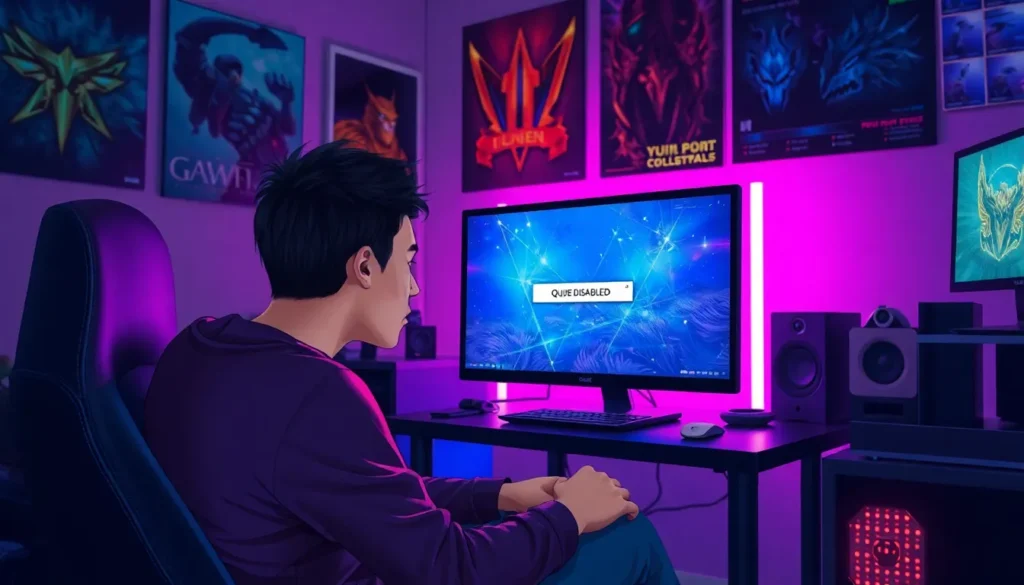
Experiencing “Queue Disabled” disrupts player engagement and satisfaction. Players often face immediate frustration since they cannot participate in matches as planned.
Short-Term Effects on Gameplay
Disruptions in matchmaking lead to players feeling anxious and irritated. Many players find it challenging to maintain focus and momentum when unable to join games. The anticipation for competitive matches diminishes, impacting overall enjoyment. Furthermore, long waiting times can result in abandoned sessions, altering players’ routines. Players may also shift to alternative games during these downtime periods. This behavior can affect their connection to Valorant and reduce their overall investment in the game.
Long-Term Consequences for the Community
Persistent queue issues foster dissatisfaction within the community, leading to decreased player retention. Many players may harbor resentment towards the developers for unresolved problems. This sentiment can result in a fragmentation of the player base, as some choose to leave for more stable alternatives. Additionally, ongoing frustrations can diminish positive interactions among players, altering the game’s community dynamics. A decline in player morale may also affect future engagement, reducing community events and discussions. Consequently, long-term discontent affects both player loyalty and the game’s reputation.
How to React When Queue is Disabled
Encountering a “Queue Disabled” message can be frustrating for players. Taking certain actions can help make the best of the situation.
Tips for Players During Downtime
Stay informed by checking official social media channels for updates. Players can also visit community forums for discussions, which may provide insights into ongoing issues. Engaging with the Valorant community can foster connections, keeping spirits high. Experimenting with practice modes allows players to refine skills while waiting. Monitoring server status websites can clarify if the issue is widespread or isolated.
Alternative Activities to Consider
Exploring other games can provide a welcome distraction during downtime. Enjoy offline titles that may not require an internet connection but offer great gameplay. Watching streams or esports events related to Valorant can enhance knowledge of game strategies. Engaging in content creation, like streaming or video editing, allows expression and creativity. Taking breaks to engage in physical activity promotes well-being and can alleviate frustration.
Reporting Issues
Players encountering the “Queue Disabled” message can report these issues effectively to enhance their gaming experience. Immediate reporting helps maintain a robust gaming environment for everyone.
How to Notify Riot Games
Players can notify Riot Games through various channels. Submitting detailed reports via the official support website remains the primary method for reporting issues. Using the in-game reporting tool can also provide rapid feedback on specific problems. Including details such as error codes and timestamps makes the reports more informative. Players can also engage on social media platforms like Twitter to reach out directly to the Riot Games support team. Providing concise and clear descriptions of the problems enhances the chances of a swift resolution.
Importance of Player Feedback
Player feedback plays a crucial role in improving the Valorant experience. Constructive criticism helps developers identify recurring issues and prioritize fixes. Notable problems often receive swift attention when players voice their concerns actively. Feedback fosters a collaborative relationship between the community and the developers, creating a better gameplay environment. Engaging with player suggestions can also lead to innovative features that enhance overall enjoyment. Ultimately, a responsive system ensures the continued growth and success of Valorant.
Experiencing the “Queue Disabled” message in Valorant can be frustrating for players eager to jump into action. While this issue can disrupt gameplay and lead to dissatisfaction, staying informed and connected with the community can help mitigate some of the negative effects. By exploring alternative activities and providing constructive feedback to developers, players can maintain their engagement and contribute to improvements in the game. Ultimately, understanding the reasons behind the queue restrictions fosters patience and resilience within the player base, ensuring a more enjoyable experience when the game is back online.